
OFFICINA NEWS
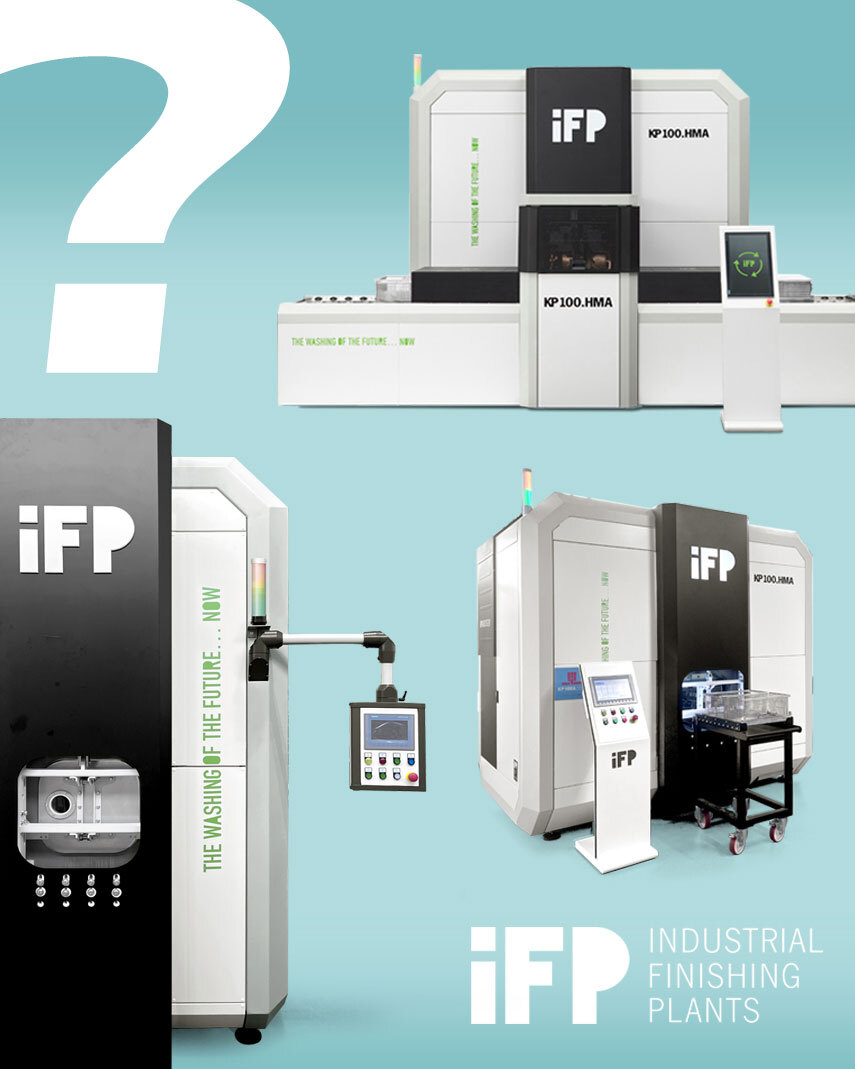
The efficiency of an industrial cleaning system for complex metal components can be measured across four areas: cleaning quality on challenging geometries, energy and water consumption per cycle, cleaning time relative to production volumes, and operating costs over time. An efficient system is not simply the one with the shortest cycle. It is the one that keeps these four factors in balance, batch after batch.
When parts have simple shapes, almost any cleaning technology can do the job. The challenge begins with complex components: blind holes, internal threads, deep cavities and surfaces that conceal the most critical residues. That is where the difference becomes clear between a truly efficient system and one that looks efficient only on paper.
What efficiency means in an industrial cleaning system
Efficiency is not the same as speed. A system that cleans quickly but leaves residues on some parts creates scrap, rework or downstream customer complaints, at a real cost far higher than the time apparently saved. True efficiency is measured by the net result: parts cleaned successfully on the first cycle, consistently, while using as little energy, water and cleaning chemicals as possible.
Complex metal components add another layer of difficulty. The geometry of a part determines whether a system can actually reach every surface or leaves inaccessible areas where contamination remains trapped.
The factors that determine actual efficiency
In practice, six factors need to be monitored:
- cleaning performance on challenging geometries
- energy and water consumption per cycle
- cycle time relative to actual production volumes
- automation and operational continuity
- maintenance and cleaning fluid management
- total cost over time
Cleaning performance on challenging geometries
A system that efficiently cleans complex components must deliver uniform results even in blind holes, internal cavities and threads, rather than only on easily accessible external surfaces.
Conventional spray cleaning tends to miss the areas that are hardest to clean. Vacuum-based technologies, or systems that immerse the parts and agitate the cleaning fluid, can carry the fluid into areas a direct spray cannot reach, reducing the proportion of parts that need rework. This is the principle behind the KP HMA range.
Energy and water consumption per cycle
A system’s energy efficiency should be assessed on its consumption per actual cycle, rather than on theoretical figures stated under ideal laboratory conditions.
Closed-loop systems with integrated fluid filtration and distillation substantially reduce both process water consumption and the amount of cleaning chemicals that need replenishing. At high production volumes, this difference can translate into significant cost savings within a few months.
Cycle time relative to actual production volumes
Cycle time must always be considered in light of a company’s actual production mix, rather than for a single isolated part: a system with a longer cycle on full loads may be more efficient than a faster system that operates below capacity.
When assessing a system, ask for data from cycles comparable to your own production volumes. A cycle time quoted under optimal conditions says little about what actually happens on the shop floor, with mixed loads and unplanned downtime.
Automation and operational continuity
The level of automation directly affects overall efficiency: a system that needs an operator in constant attendance reduces actual shop-floor productivity, even if the cleaning cycle itself is short.
An intuitive interface and automated control of the cleaning stages allow staff to be assigned to other tasks. This helps production run more smoothly and reduces the need for a dedicated operator to be present throughout the cycle. Remote monitoring of machine performance, as provided by IFP Portal, also contributes to operational efficiency.
Maintenance and cleaning fluid management
A truly efficient system keeps routine maintenance to a minimum, particularly tank cleaning and the handling of spent fluids.
Systems with automatic filtration and distillation of the cleaning fluid make it possible to recover a large proportion of waste materials, such as oils, emulsions and metal residues, and reduce manual work to a few tasks per week instead of daily interventions.
Total cost over time
The true cost of a system becomes apparent over several years, once energy and water consumption, maintenance, spare parts, waste disposal and downtime are added up, rather than looking only at the initial purchase price.
Two systems with the same list price can have very different operating costs over three or five years. It is always worth requesting an estimate of annual consumption before making a decision.
How efficiency varies by component type
For simple metal components, most cleaning technologies achieve similar results. Differences emerge when parts have intricate geometries, small dimensions or tight tolerances, as is common in precision turned parts, small metal components, automotive manufacturing, stamping, watchmaking and medtech. Cleaning applications vary considerably from one industry to another.
|
|
Conventional spray cleaning |
Closed-loop vacuum cleaning |
|
Blind holes and internal cavities |
Areas often beyond the reach of the spray |
Cleaning fluid reaches areas a direct spray cannot |
|
Consistency of results |
Varies with part geometry |
Consistent from batch to batch |
|
Consumption per cycle |
Water and cleaning chemicals need frequent replenishment |
Fluids are regenerated through filtration and distillation |
|
Spent fluid management |
Periodic disposal and tank cleaning |
Recovery of oils, emulsions and metal residues |
|
Routine maintenance |
Frequent manual interventions |
A few tasks per week |
|
Rework |
More likely with complex parts |
Reduced by effective cleaning on the first cycle |
In these applications, a closed-loop vacuum cleaning system tends to offer a tangible advantage over conventional systems: lower consumption, more consistent results and less need for rework. Systems in the KP Kleen Power range from IFP Europe, for example, are designed to combine cleaning, thorough degreasing and drying in a single vacuum cycle, recovering up to 99% of waste materials through integrated filtration and distillation.
Frequently asked questions
How do you measure the efficiency of an industrial cleaning system?
It is measured across four main factors: cleaning quality on complex geometries, energy and water consumption per cycle, cycle time relative to actual production volumes, and operating costs over time.
Is a faster system always more efficient?
No. A short cycle that leaves residues on some parts leads to scrap or rework, which can cost more than the time apparently saved.
Why do components with complex geometries need special attention?
Because blind holes, internal cavities and threads are difficult for conventional spray cleaning to reach, contamination may remain trapped even after a cycle that appears to be complete.
How much does automation affect overall shop-floor efficiency?
Significantly. An automated system reduces the need for an operator to be in constant attendance, freeing staff for other tasks and making production run more smoothly.
Should the purchase price be the only consideration when evaluating a cleaning system?
No. The true cost should be calculated over several years, including consumption, maintenance, spare parts and waste disposal, which can often add up to more than the initial machine price.
Do your complex metal components need thorough cleaning, even inside blind holes and internal cavities? Explore the KP Kleen Power range from IFP Europe, or request an assessment of consumption for your production process.