
OFFICINA NEWS
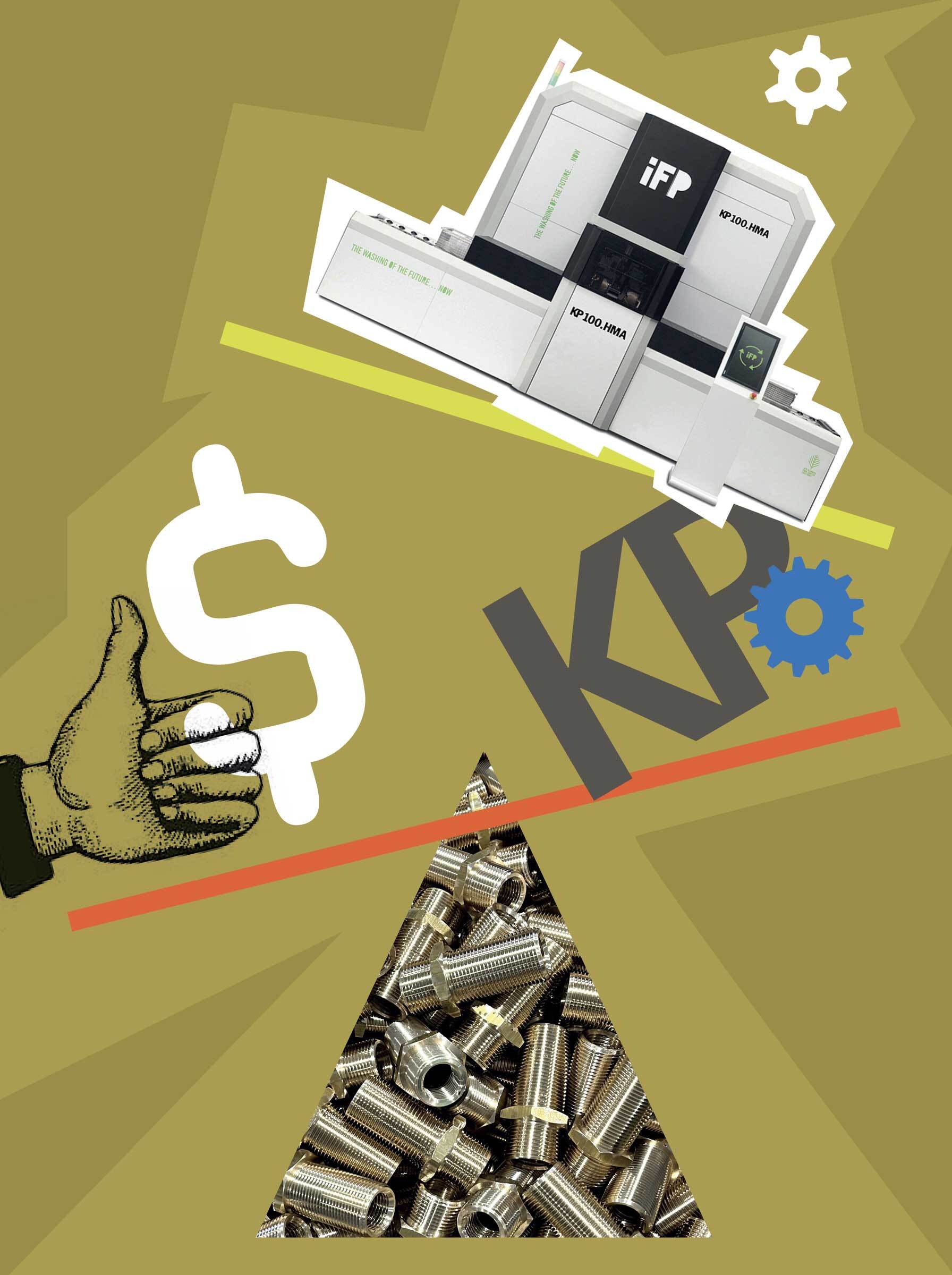
A vacuum solvent cleaning system should be assessed against five practical factors:
- capacity to handle large volumes of components
- compliance with industry standards such as ISO 16232 and VDA 19
- effectiveness on complex geometries, blind holes and internal threads
- complete drying without the risk of corrosion
- operating costs and return on investment over time
Compared with other technologies, vacuum cleaning offers a level of control over the cleaning quality of metal components that helps meet even the most demanding industrial standards.
Among the configurations available today, vacuum cleaning with modified alcohols or hydrocarbons is one of the most advanced options for companies handling high production volumes, complex geometries and demanding cleanliness requirements while keeping a close watch on operating costs.
Let’s look at each of the five factors.
1. Handling large volumes of components
Within a relatively short cleaning cycle, a modified alcohol vacuum cleaning system delivers consistent results even when large quantities of components need to be processed. Unlike many aqueous systems, the cleaning fluid does not require frequent additions of chemicals or constant monitoring of concentration levels.
Load size can be matched to actual production volumes. With automated loading and unloading, operators can turn to other tasks instead of attending the system continuously. Sizing requirements vary considerably by industry: the cleaning applications of a subcontract precision turning shop differ from those of a stamping company or a medtech manufacturer.
2. Industry standards and cleaning quality
In industries with particularly demanding cleanliness requirements, such as automotive, medtech, watchmaking and microtechnology, meeting standards such as ISO 16232 and VDA 19 is essential. A vacuum system using modified alcohols or hydrocarbons is designed to achieve these cleanliness levels consistently, batch after batch.
Meeting such demanding standards depends on the type of contamination to be removed, whether particles or surface films, and on the properties of the cleaning fluid. Its density, surface tension and solvent power all affect the final result.
3. Effectiveness on components with complex geometries
The difference between cleaning technologies becomes especially clear with components that have blind holes, deep cavities or internal threads. Vacuum conditions help the cleaning fluid reach even the most difficult areas, removing oils and liquid contaminants that conventional spray cleaning would leave behind.
This makes vacuum technology particularly suitable for small precision metal components, stamped parts, watch components and parts with tight tolerances, where even minimal residues could compromise the next production step. This is the principle behind the KP HMA range, designed for demanding applications and for handling high levels of contamination.
4. Complete drying and corrosion prevention
If a cleaned component must be completely dry to avoid the risk of corrosion, the vacuum stage is crucial. Unlike systems that rely solely on hot-air blowing, which can dry only the exposed surfaces, a vacuum cycle at very low pressure ensures that the cleaning fluid evaporates even from the most complex geometries, leaving no residual moisture.
Residual moisture is one of the most overlooked issues in cleaning machined metal parts. We explore it in this dedicated article.
5. Operating costs and return on investment
From a financial perspective, a modified alcohol vacuum cleaning system can also be advantageous over time. The initial investment may be higher than for a conventional aqueous system, but the comparison should cover the system’s entire service life.
In closed-loop systems with integrated filtration and distillation, the cleaning fluid is continuously regenerated and reused. This can result in recovery of up to 99% of waste materials, significant energy savings through optimized cycles and a sharp reduction in routine maintenance, with just a few tasks each week instead of daily interventions.
Modified alcohols or hydrocarbons: the choice depends on the contamination
The fluids used in solvent cleaning are generally compatible with a wide range of materials, from steel to more delicate alloys, making them suitable for companies that process a varied mix of components.
|
|
Modified alcohols |
Hydrocarbons |
|
Contaminants |
Mixed contamination, particulate residues, oils and emulsions |
Heavy oils and greases, machining compounds |
|
Main advantage |
Versatility across varied manufacturing processes |
Degreasing performance with heavy oily contamination |
|
Typical applications |
Precision turning, small parts, stamped components, medtech |
Cold forming, blanking, heavily oiled parts |
|
Material compatibility |
Broad, from steel to delicate alloys |
Broad, from steel to delicate alloys |
|
Fluid circuit |
Closed loop with filtration and distillation |
Closed loop with filtration and distillation |
The choice between modified alcohols and hydrocarbons depends primarily on the type of contamination to be removed and the cleanliness level required for subsequent operations. This is why the design of a vacuum solvent cleaning system always begins with an analysis of the specific contamination, even before the machine is sized.
When the production process also calls for aqueous cleaning solutions, hybrid configurations such as the KP HYBRID range combine modified alcohol and an aqueous solution in the same system.
Frequently asked questions
What is the difference between solvent cleaning with modified alcohols and with hydrocarbons?
Both fluids effectively remove oils and greases from metal components, but the choice depends on the contamination and the required cleanliness level. Modified alcohols offer greater versatility with mixed and particulate contamination, while hydrocarbons are often preferred for removing heavier oils and greases. The final choice always depends on an analysis of the specific contamination to be treated.
Which cleanliness standards should a vacuum solvent cleaning system meet?
In automotive, medtech, watchmaking and microtechnology, common reference standards include ISO 16232 and VDA 19, which establish limits for residual contamination on components. A vacuum system using modified alcohols or hydrocarbons is designed to meet these requirements consistently, batch after batch.
Is vacuum cleaning effective on components with blind holes or complex geometries?
Yes. Vacuum conditions allow the cleaning fluid to reach deep cavities, blind holes and internal threads: areas that conventional spray cleaning cannot reach. This makes the technology particularly suitable for small precision components, stamped parts and watch components.
Does a vacuum cleaning system prevent corrosion after drying?
Yes, provided that the cycle reaches a sufficiently low pressure to evaporate the cleaning fluid completely, even from the most complex geometries. Unlike systems that use hot-air blowing alone, which dries only exposed surfaces, vacuum drying removes the residual moisture that causes corrosion.
Is a vacuum solvent cleaning system more cost-effective than an aqueous system?
The initial investment is generally higher than for a conventional aqueous system. However, in closed-loop systems with integrated filtration and distillation, the cleaning fluid is regenerated and reused, with recovery of up to 99% of waste materials and a substantial reduction in routine maintenance. The comparison should therefore cover the system’s entire service life, rather than only its purchase price.
IFP Europe designs the KP HMA range of cleaning systems based entirely on vacuum technology with modified alcohols or hydrocarbons. With cycles reaching 1 mbar and integrated filtration and distillation, they are designed to meet these needs while balancing cleaning quality and operating costs.
Are you considering a vacuum solvent cleaning system for your components? Explore the KP HMA range or request a technical consultation.