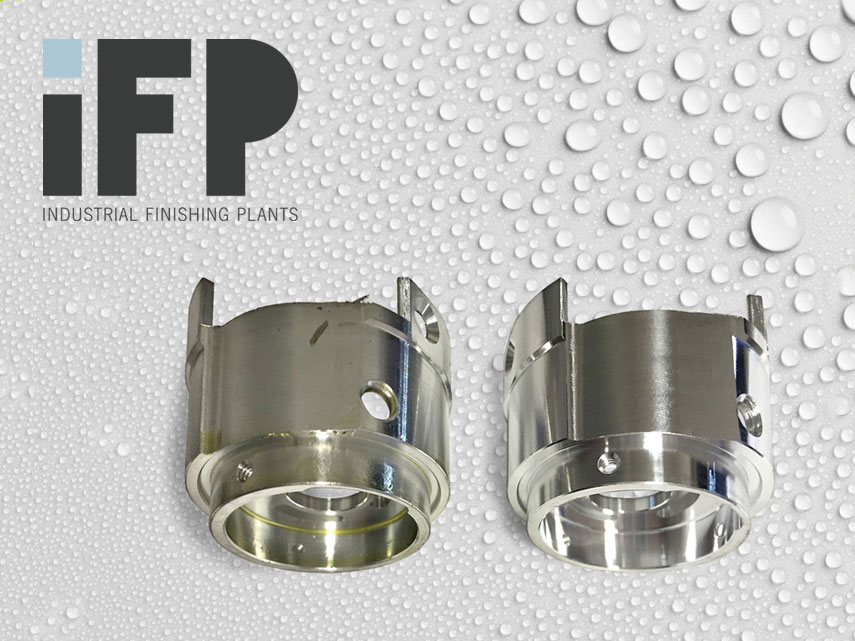
“Water is a contaminant too. In metalworking,” explains Andrea Bertolino, “water is often needed to wet and cool parts during operations such as turning or milling. Once machining is complete, though, that same water becomes a contaminant that has to be removed.
That’s because residual water contains salts and impurities.
If it isn’t removed properly, it leaves residues that can compromise the part’s surface quality. Hard water, for example, which is rich in limescale, can leave visible white spots, especially on metals like aluminum. These spots form when the salts in the water crystallize as the part dries. When a part is covered by a light film of oil, the salts may stay ‘hidden’, because the oil prevents them from crystallizing. But once a cleaning process with high degreasing power, such as solvent cleaning, removes the oil completely, the salt residue becomes much more visible.”
Are there ways to remove limescale and prevent residues?
“In traditional water-based cleaning systems, a final rinse with demineralized water is often used to remove salts before drying. This reduces the risk of spots and stains. Alternatively, low-limescale or demineralized water can be used throughout the entire production process, preventing the problem at its source.”
How IFP systems handle water
“IFP washing machines treat water as a contaminant to be removed. Thanks to their advanced separation technology, they completely eliminate both oils and residual water. This ensures optimal cleaning, with no salt residues or white spots on the metal surface. For the most stubborn salt contamination, IFP’s KP HYBRID line, which combines modified alcohol cleaning with aqueous cleaning, removes residues of every kind.”
In conclusion
“Removing water from machined metal parts is an essential step, both in the cleaning process and in achieving a high-quality finish. Advanced systems like IFP’s deliver flawless results, preventing contamination and optimizing the production cycle.”