
OFFICINA NEWS
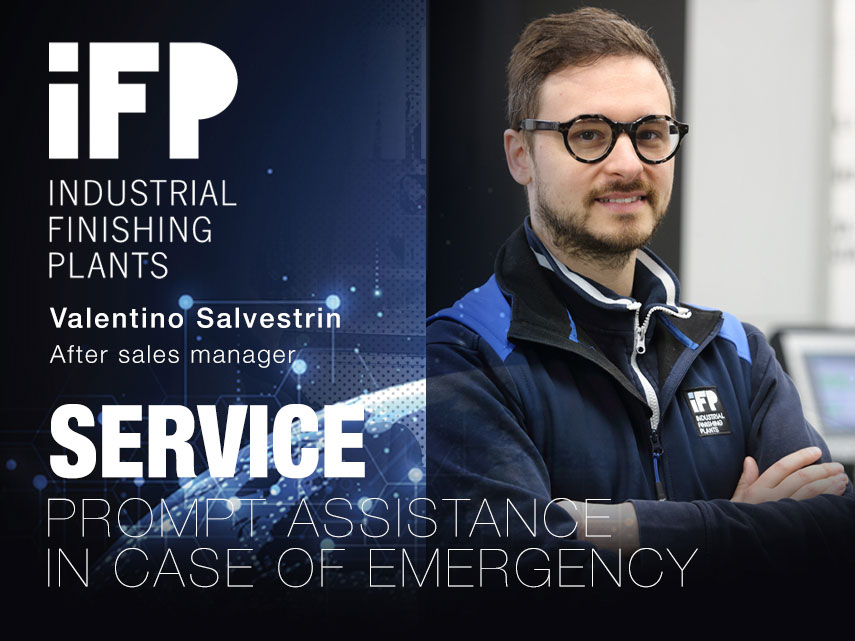
Every service request tells a different story: a cleaning system that needs to get back up and running, an upgrade to complete, or a technical question that needs an answer. IFP Europe’s Service department is designed to address these needs with practical, customer-focused support, both remotely and through an extensive on-site service network.
“Supporting our customers every day is the foundation of our work,” says Valentino Salvestrin, Head of Service at IFP Europe. “Quality is measured not only in numbers, but also in our ability to listen, understand the problem and provide genuinely effective solutions.”
Response Times
Once a service ticket is opened—whether by email, phone or direct request—our technicians take charge of the case, work to resolve the issue and contact the customer again if necessary.
For urgent requests, particularly those that could lead to machine downtime, we guarantee a very prompt initial response. After gathering all the necessary information, we assess the timing and type of intervention required. In many cases, the issue can be resolved immediately through remote support.
“It often takes just a few minutes to restore a system to operation remotely. If that is not enough, the ticket is escalated to an on-site service visit, with a technician dispatched along with the necessary spare parts,” Salvestrin explains.
For non-urgent enquiries—such as questions about installations, spare parts or accessories—the response window is longer, but always within 48 hours.
What Do the Data Tell Us?
Analysis of the data collected since the beginning of the year reveals a significant result: fewer service tickets have been opened compared with the same period in 2024, even though the installed base of cleaning systems has grown considerably.
Three main factors explain this result:
- Greater internal efficiency. The Service department has been strengthened with additional dedicated personnel and faster, more effective case management.
- Targeted interventions. Resolving issues at the first point of contact helps prevent repeated service tickets.
- Scheduled maintenance. With more field technicians available, it has been possible to increase preventive maintenance visits—annually, every six months or on request—reducing unexpected breakdowns.
“Fewer tickets do not mean less work; they mean greater efficiency. We have been able to identify and resolve critical issues before they develop into real problems. Today, the team is more responsive and quicker to act, and this is reflected in a reduction in tickets despite the growing number of installed systems.”
Types of Service Requests
Service tickets are not limited to emergencies. They also cover maintenance requests, software support, spare parts, consumables, accessories and general enquiries.
There are two main ways a request can be handled:
- Remote support, when the issue can be resolved without an on-site visit.
- On-site service, with IFP technicians travelling to customers throughout Italy—from the Marche and Tuscany regions to Sardinia. The service fleet currently comprises 15 vans operated by company employees.
From the outset, IFP has chosen to provide after-sales service directly through its own employees rather than outsourcing it to external companies or service providers. This approach ensures reliable service data, supports ongoing technological development, prevents the loss of valuable technical knowledge and helps maintain consistently high levels of efficiency.
“Being close to our customers is essential. Having a physical presence across the country allows us to shorten intervention times and strengthen customer trust,” Salvestrin emphasizes.
International Service Support
Outside Italy, the company works through local distributors who perform the same role as its in-house technicians: they receive service requests, provide initial support and, when necessary, visit customers on site.
If they encounter difficulties, they contact IFP Europe’s headquarters in Italy for technical support or specialist guidance.
This service model operates across Europe, the United States and Asia. For more complex activities—including installations, upgrades and commissioning—IFP Europe technicians may also provide direct assistance.
“We coordinate with our international partners every day, sharing procedures, tools and know-how to ensure the same quality standards everywhere. A recent example is an installation in Spain, carried out jointly by our local distributor and one of our technicians. In the United States, meanwhile, our distributors handled assembly and preliminary testing, while we took care of final acceptance testing and training.”
The Goal: Minimize Machine Downtime
The Service department has a clear priority: minimize machine downtime and get every cleaning system back into operation as quickly as possible.
“When a machine is down, our customer loses productivity. That is why we work to eliminate unnecessary delays and respond as quickly and effectively as possible,” Salvestrin concludes.
With this goal in mind, the company has already begun training three new technicians, who are expected to become operational during 2026, further strengthening both its internal and field service capabilities.